
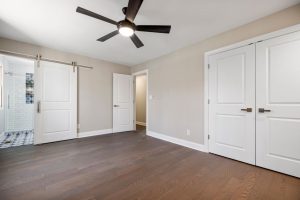
A door may seem like a small detail, but its condition and operation can provide valuable clues about the condition of the home around it.
During a home inspection, doors are worth more attention than they often receive. A door that sticks, rubs, swings open on its own, or no longer latches properly may be nothing more than a maintenance issue. However, it can sometimes indicate changes elsewhere in the property that deserve a closer look.
In New England homes, seasonal temperature changes, moisture, frost, and normal settlement can all contribute to changes in how doors and their frames operate.
When a Door Doesn’t Fit Quite Right
Interior doors should generally open, close, and latch without excessive force. When a door suddenly becomes difficult to operate, the cause may be as simple as a loose hinge or a frame that needs adjustment.
However, multiple doors with similar problems can be more significant.
If several doors in the same area are sticking or showing unusual gaps, it may be worth examining the surrounding floors, walls, framing, and foundation for other signs of movement or moisture. A single troublesome door does not automatically indicate a structural concern, but a pattern of problems can provide an important clue.
The key is looking at the bigger picture.
Pay Attention to the Gaps
The gaps between a door and its frame can also reveal changes worth investigating. Uneven spacing may be caused by installation, normal wear, or movement within the structure.
The surrounding area can provide additional information. Cracked drywall, separated trim, damaged framing, or other unusual conditions may help determine whether the door problem is isolated or part of a broader issue.
This can be particularly relevant in older homes, where original construction may exist alongside additions, renovations, and repairs completed over many years.
Exterior Doors Tell Another Story
Exterior doors serve an important role in keeping weather and moisture outside. Problems with the door, frame, threshold, or weatherstripping can reduce energy efficiency and potentially allow water to enter.
Signs such as staining, soft or deteriorated wood, damaged caulking, or gaps around the frame should not be overlooked. In a climate with snow, ice, heavy rain, and significant seasonal changes, even a relatively small opening can contribute to moisture-related deterioration over time.
Small Details Can Matter
A sticking door does not necessarily mean there is a serious problem with a home. Likewise, a door that operates perfectly does not guarantee that everything behind the walls is in good condition.
Doors are simply one of many clues available during an inspection.
The most useful approach is to consider the door alongside the floors, walls, ceilings, windows, exterior surfaces, and foundation. When several observations point in the same direction, they can help identify areas that may warrant further evaluation.
Sometimes a door just needs a minor adjustment. Other times, it may be quietly drawing attention to something else.
Either way, it is a small detail worth noticing.